Selling on Amazon today isn’t simply about uploading a product and waiting for sales to roll in. The marketplace has matured. Competition is sharper, algorithms are smarter, and customer expectations are higher than ever. While a good product is still essential, it’s no longer enough on its own.
Amazon Seller Central is where strategy meets execution. Used correctly, it becomes a powerful growth engine. Used passively, it quickly turns into a source of confusion, inefficiency, and missed opportunity.
This Amazon Seller Central guide is built for those at the very start of their journey. If you’re exploring Amazon Seller Central for beginners, learning how to use Amazon Seller Central, or laying the groundwork for mastering Amazon Seller Central long term, this guide will help you move with clarity rather than guesswork.
What Amazon Seller Central Really Is (and Why It Matters)
Amazon Seller Central is far more than a back-office tool. It’s the control room for your entire Amazon operation.
This is where Amazon decides:
- Which products deserve visibility
- Which listings convert well enough to rank
- Which sellers are rewarded with scale and which quietly disappear
Through Seller Central, you control your catalogue, pricing, fulfilment, advertising, customer experience, and data. Every action you take sends signals to Amazon’s algorithm. Those signals determine your growth trajectory.
Understanding this relationship early is critical. Amazon doesn’t reward effort. It rewards performance.
Setting Up Seller Central the Right Way From Day One
Most beginner mistakes happen before the first product even goes live.
Choosing the Correct Seller Plan
Amazon offers two plans:
- Individual – suitable only for casual or test sellers
- Professional – essential for anyone serious about growth
If you plan to advertise, build a brand, or scale across marketplaces, the Professional plan isn’t optional. It’s foundational.
Getting Your Account Approved Smoothly
Amazon’s verification process is strict by design. Expect to provide:
- Valid ID and business details
- A chargeable card and verified bank account
- Accurate tax and VAT information
Consistency matters. Small discrepancies can lead to delays, re-verification requests, or early account issues that are difficult to unwind later.
Navigating Seller Central Without Feeling Overwhelmed

For many, Amazon Seller Central for beginners feels unintuitive at first. The key is knowing what actually deserves your attention.
Core Areas You’ll Use Daily
- Inventory – Listing management, stock levels, suppressions
- Orders – Fulfilment status, returns, refunds
- Advertising – PPC campaigns and performance
- Reports – Sales, traffic, inventory, and profitability data
- Performance – Account health and customer metrics
You don’t need to master everything at once. But you do need to know where to find answers when something changes because it will.
Building Listings That Convert, Not Just Appear
Visibility without conversion is wasted spend.
Your product listing is where Amazon SEO, brand perception, and customer trust intersect. Learning how to use Amazon Seller Central effectively starts with understanding how listings influence both ranking and sales.
The Building Blocks of High-Performing Listings
- Titles that balance keyword relevance with clarity
- Bullet points that communicate benefits before features
- Descriptions or A+ Content that remove doubt and reinforce value
- Images that educate, differentiate, and convert
- Backend keywords that support indexing without over-optimisation
Amazon’s algorithm measures how shoppers interact with your listing. If customers click but don’t convert, your visibility will decline, no matter how good your product is.
Choosing the Right Fulfilment Model
Fulfilment impacts conversion, scalability, and margins.
Fulfilment by Amazon (FBA)
FBA removes operational friction and unlocks Prime eligibility. It often leads to higher conversion rates and faster scale, but it comes with fees that must be actively managed.
Fulfilment by Merchant (FBM)
FBM offers control and flexibility. It can work well for certain categories, margins, or logistics setups, but it places the full customer experience on your shoulders.
Many experienced sellers use both models strategically, depending on product and market conditions.
Inventory Management: Where Profits Are Often Won or Lost
Inventory isn’t just a logistics issue. It’s an algorithmic one.
Running out of stock can damage ranking and momentum. Overstocking leads to unnecessary fees and cashflow pressure. Seller Central provides the tools to monitor sell-through, restock recommendations, and aged inventory, but only if you use them consistently.
Strong inventory discipline is one of the quiet differentiators between struggling sellers and scalable brands.
Amazon Advertising: A Core Skill, Not an Add-On
Amazon is now one of the world’s largest advertising platforms. Ignoring PPC is no longer viable.
Where Beginners Should Start
- Sponsored Products – High-intent placements that drive immediate sales
Automatic campaigns are useful early on for data collection, but long-term success depends on structured manual campaigns with clear objectives.
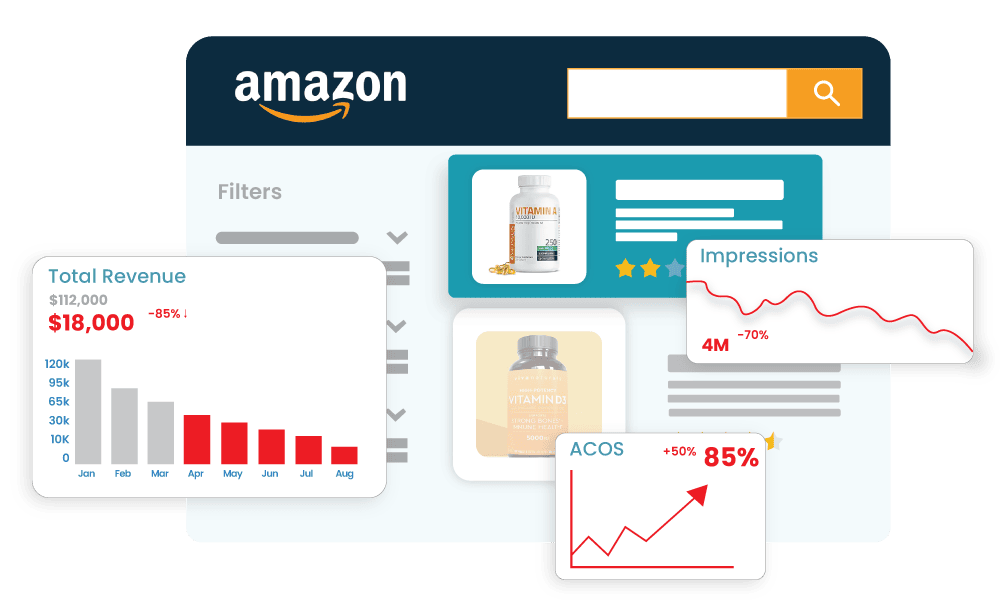
Advertising doesn’t replace optimisation. It amplifies it. Poor listings make ads expensive. Strong listings make them efficient.
Protecting Your Account Health
Amazon enforces performance standards relentlessly. Growth means nothing if your account is at risk.
Key metrics to monitor include:
- Order Defect Rate
- Late Shipment Rate
- Cancellation Rate
- Customer feedback and returns
Seller Central will warn you before action is taken, but only if you pay attention. Proactive sellers resolve issues early. Reactive sellers learn the hard way.
Using Reports to Make Better Decisions

One of the most overlooked advantages of Seller Central is data.
Sales reports, traffic metrics, advertising performance, and inventory analytics tell a clear story, if you know how to read them. These insights guide pricing decisions, keyword strategy, expansion planning, and profitability improvements.
This is where mastering Amazon Seller Central truly begins: replacing assumptions with evidence.
Moving From Beginner to Scalable Seller
As your operation matures, Seller Central unlocks advanced tools:
- Brand Registry and enhanced brand protection
- A+ Content and Brand Stores
- Promotions, coupons, and experiments
- Multi-marketplace expansion
At this stage, success depends less on learning the platform and more on building repeatable systems that scale.
Final Thoughts: Seller Central Is a Skill, Not a Shortcut
Amazon Seller Central rewards structure, consistency, and strategic thinking. It’s not designed for shortcuts, and that’s a good thing.
For beginners, the opportunity is massive. Those who invest early in understanding how to use Amazon Seller Central, building strong foundations, and learning how Amazon actually works put themselves in a position to grow steadily rather than reactively.
Mastery doesn’t come from doing more. It comes from doing the right things, in the right order, with clear intent.